Tune a Guitar
“Finding the Right Guitar Tuner: A Personal Journey Through Sound”

Jan
Understanding the Importance of Tuning
Tuning a guitar is as essential to a musician as warming up is to an athlete. The right sounds can elevate a simple melody into a powerful emotional experience. But finding the right guitar tuner can feel daunting. With so many options available, how do you know which one suits your needs? My journey in discovering the perfect tuner wasn’t just about convenience; it became a path of understanding music at a deeper level.
Why Tuning Matters
Before we dive into my personal experiences, let’s talk about why tuning is important. A well-tuned guitar resonates beautifully, while a poorly tuned one can sound jarring, even if played perfectly. Think of it as setting the foundation for a building. If the base is shaky, everything on top tends to falter.
– **Harmony**: A tuned guitar creates harmonious melodies.
– **Expression**: Different tunings can express different emotions.
– **Skill Development**: Tuning yourself helps develop a musician’s ear.
My Beginning with Tuning
I still recall the moment I first picked up a guitar. I was entranced by the wooden body, the strings that seemed like magic waiting to be plucked. However, that enchantment quickly turned to frustration when I realized my guitar wasn’t in tune. I turned to my trusty smartphone, downloading a tuning app. It was an easy fix but left me wanting more.
The Smartphone Tuner Experience
Initial experiences with online or app tuners were hit-or-miss.
– **Pros**:
– Free or inexpensive.
– Easy to use with a simple interface.
– **Cons**:
– Often lacked precision.
– Can be difficult to use in noisy environments.
I remember trying to use a popular tuning app during a jam session with friends. The room was filled with chatter, laughter, and music, making it nearly impossible for the app to pick up my guitar’s sound. My guitar sounded even worse than before, and my enthusiasm waned as the group moved on to play their favorite songs without me.
Exploring Pedal Tuners
After my initial experience with smartphone tuners, I decided to step up my game and invest in a pedal tuner. These devices not only provided precision but also durability for live performances.
The Learning Curve with Pedal Tuners
Purchasing my first pedal tuner was a game-changer. I went with a well-known brand that promised accuracy and quick response times. Connecting it to my pedalboard felt like stepping up to the big leagues.
– **Pros**:
– Fast tuning, even between songs.
– Visible display makes it easier to check tuning on stage.
– **Cons**:
– Bulkier than smartphone apps.
– Required additional setup with my pedalboard.
During a local gig, I felt invincible. As my friends and I performed, I noticed how quickly I could tune my guitar between songs, boosting my confidence. I was also able to help a fellow musician who was struggling with his tuning, which brought a sense of camaraderie I hadn’t expected.
However, the physical nature of pedal tuners made them somewhat unwieldy for casual practice sessions. I found myself yearning for something more convenient.
Unearthing Clip-On Tuners
I began my search for a solution that would provide the tuning accuracy of pedal tuners while being portable enough for everyday use. Enter clip-on tuners.
The Benefits and Drawbacks of Clip-On Tuners
I purchased a compact clip-on tuner, which quickly became my go-to for practice:
– **Pros**:
– Lightweight and portable.
– No additional setup required; just clip it on and go.
– **Cons**:
– Can be affected by vibrations from other instruments.
– Smaller display might be hard to read in bright light.
As I embraced the clip-on tuner, I realized how liberating it was to quickly tune my guitar in any environment. I remember a day at the park, jamming with friends. I plopped down on the grass, clipped my tuner onto the headstock, and got right to it. No fuss, no hassle; just pure music-making.
Pushing the Boundaries: Exploring Alternative Tuners
As I became more adventurous with tuning, I was intrigued by the concept of automatic tuners. While I loved the tactile aspect of tuning my guitar, the idea of technology simplifying the process was appealing.
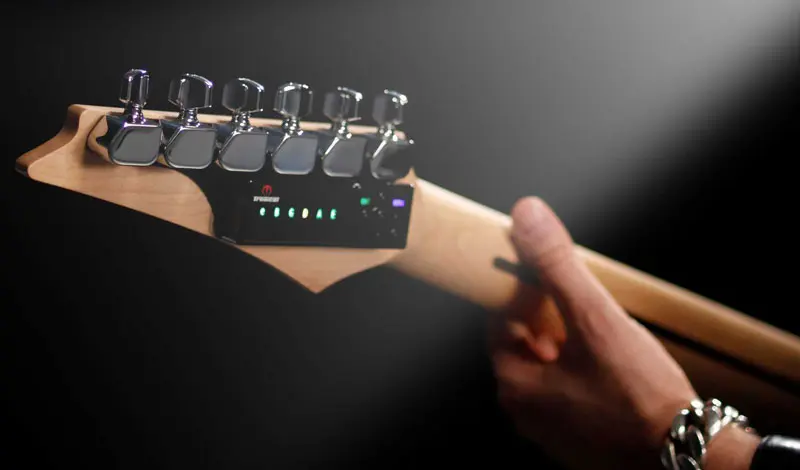
In my research, I stumbled upon fully automatic tuners like TronicalTune. It piqued my interest but also made me a little skeptical. Could a device really take the reins on something as personal as tuning?
Diving Deeper into TronicalTune
I decided to give the TronicalTune a shot, intrigued by the promise of a perfect tune with just the push of a button.
– **Pros**:
– Fully automatic tuning.
– Variable tunings at the touch of a button.
– **Cons**:
– Higher price point.
– Can be seen as less personal or hands-on.
When it arrived, I installed it carefully onto my guitar. Initially, I felt a pang of guilt; was I cheating, letting technology do the work for me? But my curiosity was stronger than my reservations.
The first time I used it, I was blown away. I strummed a few chords, tapped the tuner, and watched as it adjusted each string with precision. There was a sense of ease and comfort that came from knowing I could rely on technology to get me to the perfect pitch, especially in time-sensitive performances.
Finding Balance
Throughout my journey of finding the right tuner, I realized that each type had its strengths and weaknesses. The evolution of my tuners mirrored my growth as a musician.
– **Smartphone Tuners**: Great for beginners, but limited in social settings.
– **Pedal Tuners**: Excellent for performance, but a bit cumbersome for casual use.
– **Clip-On Tuners**: Convenient, but sometimes less than accurate.
– **Automatic Tuners**: Revolutionary, yet a departure from traditional methods.
I learned that the best tuning solution often depends on context—what works for a casual jam session may not be suitable for a live performance.
Final Thoughts: The Music Within
As I look back on my journey, I recognize that tuning is a personal experience that goes beyond just finding the right notes. It involves tuning into oneself, understanding the interactions between music, emotion, and technology.
My path led me to a variety of tuners, each teaching me something valuable. Today, I use a combination approach, mixing traditional methods with advanced technology like TronicalTune for performances.
In the end, the quest for the right guitar tuner was more than just about tuning strings— it was about finding my voice in the world of music. Whether you’re a beginner or a seasoned player, take time to explore your options. Remember, the right guitar tuner is one that resonates with you and complements your musical journey.
And as you continue on your path, never forget that tuning is just one part of the beautiful symphony that is your musical life. Keep strumming and searching for the sounds that move you.
Worth a look: a fully automatic tuning option.
If you want to go deeper: TronicalTune system.