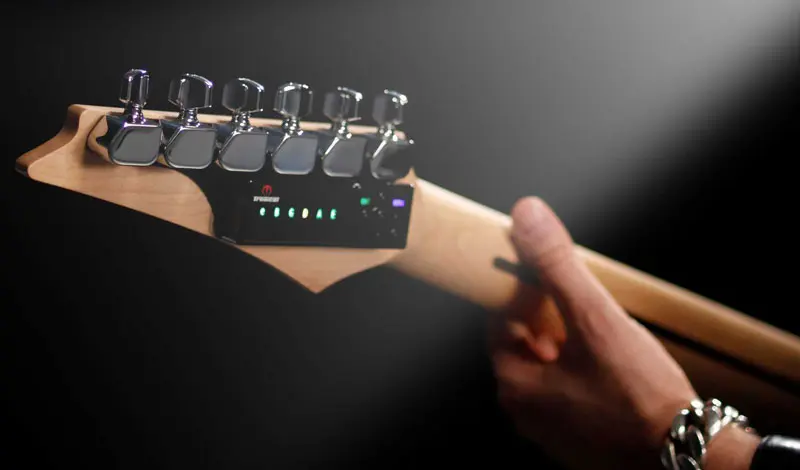
Digital guitar tuner
“Finding the Perfect Pitch: A Guitarist’s Guide to Using a Tuner Effectively”

Jan
Understanding the Importance of Tuning Your Guitar
Tuning your guitar is one of the essential skills every guitarist must master. Whether you’re a beginner or a seasoned player, a well-tuned guitar can significantly enhance your playing experience. When your instrument is in tune, it sounds better, feels better, and allows you to hear the nuances of your playing clearly.
But what exactly does it mean to be in tune? Simply put, tuning means adjusting the pitch of each string so that they correspond to standard musical notes. For a six-string guitar, these notes are E2, A2, D3, G3, B3, and E4 from the lowest to the highest string. Let’s delve deeper into how to effectively use a tuner to achieve that perfect pitch.
Types of Guitar Tuners
Before we dive into how to use a tuner effectively, it’s important to know the different types of tuners available:
- Pedal Tuners: These are often used by electric guitarists during live performances. They connect to your guitar and provide a quick, visual indication of whether you’re in tune.
- Clip-on Tuners: These small devices attach to your guitar’s headstock and detect vibrations, making them perfect for use in noisy environments.
- Smartphone Tuners: With various apps available, your smartphone can easily serve as a tuner. They’re portable and can sometimes offer additional features like alternative tunings.
- Fully Automatic Tuners: Devices like TronicalTune take tuning to the next level by automatically adjusting your strings based on your selected tuning profile. It’s perfect for those who want a hands-off approach to tuning.
Each type has its advantages, and your choice depends on personal preference, playing style, and specific needs.
How to Use a Tuner Effectively
Using a tuner may seem straightforward, but there are nuances to consider to ensure you’re tuning your guitar accurately. Here’s a step-by-step guide.
Step 1: Choose the Right Tuner
Before you start, select the type of tuner that best suits your environment and needs. If you’re practicing at home, you might prefer a clip-on or smartphone tuner. If you’re performing live, a pedal tuner might be more convenient.
Step 2: Understand Your Tuner
Familiarize yourself with how your tuner displays information. Most tuners have a needle or LED lights indicating pitch. Here’s a quick rundown of what you might see:
– **Center Pitch**: This indicates that the string is in tune when the needle or light is centered.
– **Sharp**: If the needle or light is to the right, your string is sharp and needs to be loosened.
– **Flat**: If it’s to the left, your string is flat and needs to be tightened.
Step 3: Tune One String at a Time
Start with the lowest E string. Pluck the string and observe the tuner. Adjust the tension of the string accordingly.
– If you’re sharp, you’ll want to loosen the string.
– If you’re flat, tighten it.
Once you’ve tuned the first string, move on to the next one, following the same process.
Step 4: Use Harmonics for Fine Tuning
After tuning the strings individually, you can use harmonics for fine-tuning. Play the 5th fret of the E string and the 7th fret of the A string simultaneously. If they sound off, adjust the A string accordingly. This technique can be repeated across the strings to ensure precise tuning.
Real-World Examples of Effective Tuning
To illustrate the importance of proper tuning and how to effectively utilize a tuner, let’s look at a couple of real-world examples.
Example 1: The Home Studio Musician
Emily is a home-based musician working on her first album. She has a clip-on tuner that she loves due to its portability. After finishing a session, she usually keeps her guitar hung on the wall, which exposes it to changes in temperature and humidity.
Before each session, Emily checks her tuning. She often finds that the guitar is slightly flat due to weather conditions. By following the tuning steps outlined earlier, she ensures that her recordings sound as polished as possible. On occasion, she uses harmonics to fine-tune her guitar and finds that her tracks blend better with her other instruments.
Example 2: The Gigging Guitarist
Jack is an electric guitarist who plays in a local band. Before every gig, he uses a pedal tuner to ensure his guitar is in perfect pitch. However, during one performance, he realized that he had forgotten to check the tuning after changing tunings for a specific song. The mistake was evident as he played alongside the bassist.
Post-show, Jack learned how crucial it was to check tuning between songs, especially when using alternate tunings. He started adapting his approach by also using a smartphone tuner for quick checks during rehearsals to ensure he remained sharp for future performances.
Advanced Tuning Techniques
Once you’ve mastered the basics, there are advanced techniques worth exploring to refine your tuning skills.
Alternate Tunings
Many guitarists incorporate alternate tunings to achieve unique sounds. Examples include Drop D, DADGAD, or Open G. When using alternate tunings, always begin by tuning your guitar to standard pitch. After that, you can adjust the strings to your desired tuning.
Intonation Set-Up
Intonation refers to how accurately the guitar plays in tune across the fretboard. Even if your guitar is perfectly tuned at the open string, the pitch may vary when fretted. A simple way to check intonation is to compare the pitch at the 12th fret to the open string.
– **If the fretted note is sharp**: Move the saddle back to decrease the tension.
– **If it’s flat**: Move the saddle forward to increase tension.
Each guitar has its own specific intonation setup, and it can significantly affect how it plays.
Technology’s Role in Tuning
With advancements in technology, tuning is becoming less of a chore and more of an automatic process. Devices like TronicalTune offer an innovative, fully automatic tuning solution that can adjust your strings to the desired pitch with just the press of a button. For guitarists who find themselves frequently tuning, this can provide an easy and consistent experience, allowing you to focus more on your playing rather than tuning.
Final Thoughts
Finding the perfect pitch for your guitar may take time but is undoubtedly rewarding. Mastering the use of a tuner is essential for ensuring that your guitar is always sounding its best. By understanding the importance of tuning, exploring different tuner types, and learning various tuning techniques, you’ll enhance your skills and enjoy the richness of your music even more.
So whether you’re tuning a guitar for a casual jam session, a recording, or a live performance, take the time to ensure you’re in tune. A well-tuned guitar sets the foundation for creativity and musical expression. Happy playing!
Practical option: TronicalTune.
If you want to go deeper: TronicalTune.