

String winding
Fast changes. Clean winding. Reliable tuning.
The right string path helps every automatic tuner work faster and more consistently.
String winding
The right string path helps every automatic tuner work faster and more consistently.
Feed the string straight through, lock it mechanically and cut the excess. No traditional wraps are needed.
Use a clean winding pattern with minimal, tidy wraps. Avoid crossing the string over itself.

Keep the string under tension by hand. Wind it around the lower recess of the string shaft by half a turn — never more than one complete turn.
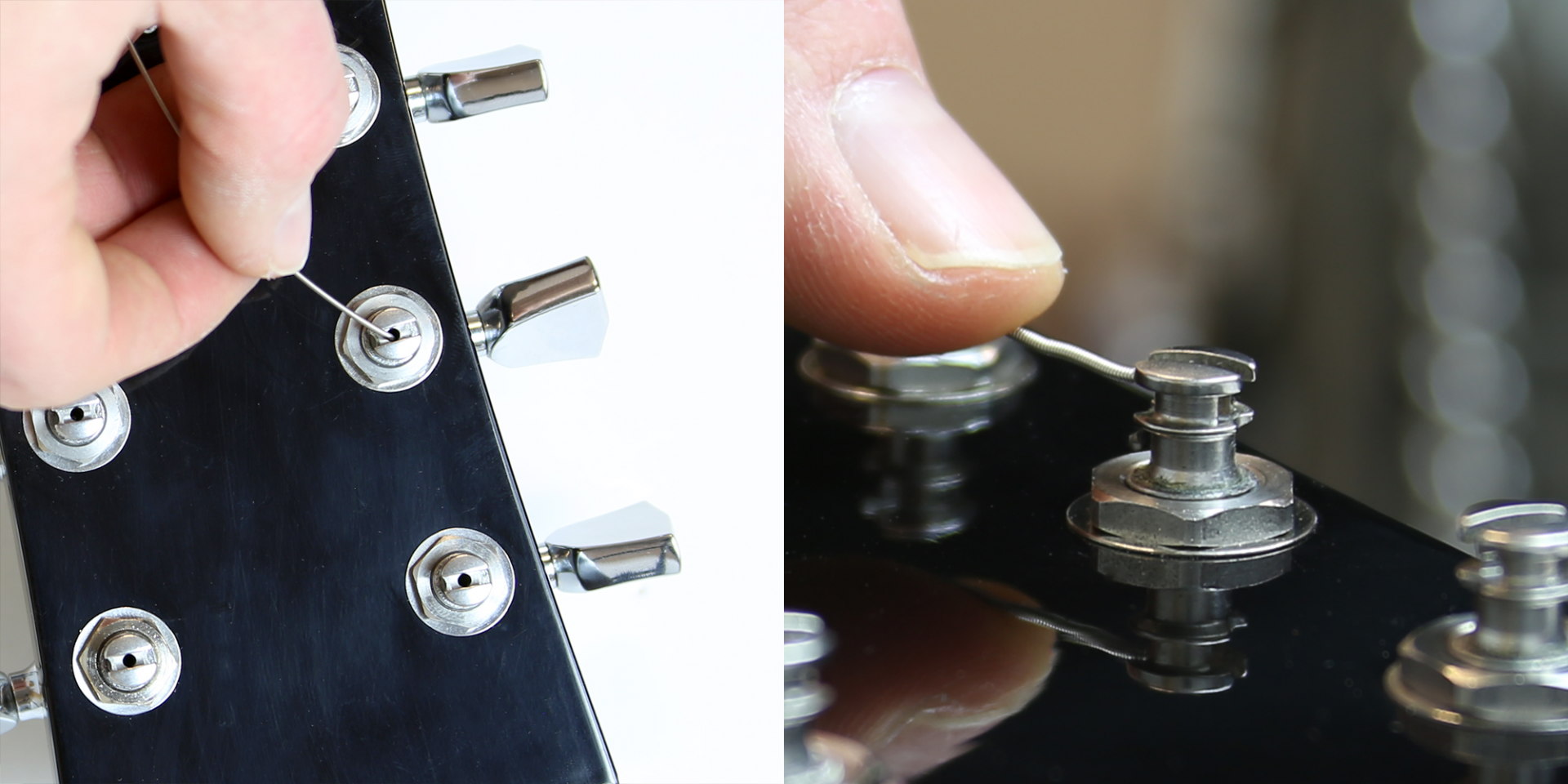
Lead the string through the slot from the lower recess to the upper recess of the string shaft while keeping it tensioned.

Guide the string through the upper slot and bend it firmly. For thin strings, form a figure-eight around the slot so the string locks securely.

When the string is seated and secure, clip off or shorten the remaining end to the desired length.

Keep the string under tension by hand. Wind it around the lower recess of the string shaft by half a turn — never more than one complete turn.

Guide the string upward through the slot. Wrap it once clockwise around the thread; use two turns for thinner strings.

Do not use a screwdriver. Tighten the Locknut by hand; hand-tight is normally sufficient.

Once the string is securely locked, shorten the remaining string end close to the post.

As on the bass side, keep the string under tension by hand and make half to a maximum of one turn around the lower recess.

Guide the string upward through the slot. Follow the mirrored treble-side direction shown in the photo: one wrap, or two wraps for thinner strings.
Do not use a screwdriver. Tighten the Locknut by hand; hand-tight is normally sufficient.

Once the string is securely locked, shorten the remaining string end close to the post.

If required, tighten the Locknut slightly with a 1-cent coin. Never use a screwdriver — excessive force can damage the gear wheels inside the PowerHead.