Chromatic Tuner
“Finding the Right Guitar Tuner: A Personal Journey Through the Options”

Jan
Understanding the Need for a Good Guitar Tuner
As a guitarist, there’s nothing quite as disheartening as picking up your instrument only to find it’s out of tune. Whether you’re a seasoned performer or a casual strummer, keeping your guitar in tune is essential for a good playing experience. Over the years, I’ve embarked on a personal journey to find the right guitar tuner, navigating the myriad of options available on the market.
Having tried everything from clip-on tuners to smartphone apps, I’ve learned that there’s no one-size-fits-all solution. In this article, I will share my experiences, recommendations, and insights to help you find the right tuner for your needs.
The Basics: What to Look for in a Guitar Tuner
Before diving into specific options, it’s important to understand what features matter most. Here are a few key aspects to consider:
- Accuracy: A good tuner should provide precise readings, ensuring your guitar sounds its best.
- Ease of Use: Whatever you choose, it should be user-friendly. You don’t want to spend more time tuning than playing.
- Portability: For guitarists on the go, a compact and lightweight design is crucial.
- Battery Life: If you’re using a battery-powered tuner, consider how long it lasts between charges or replacements.
With these considerations in mind, let’s explore the different types of tuners available.
Types of Guitar Tuners
There are several types of guitar tuners, each with its own advantages and disadvantages.
1. Clip-On Tuners
Clip-on tuners are among the most popular options for guitarists. As the name suggests, these devices clip onto the headstock of your guitar and use vibration to detect pitch.
**Real-World Example:** I purchased a Snark clip-on tuner a couple of years ago. It was highly recommended for its speed and accuracy. Once I clipped it onto my guitar, I was able to get it in tune almost instantly. The bright display made it easy to read, even on dimly lit stages.
However, I found that the tuner sometimes struggled with bass frequencies, which could be a drawback for musicians with diverse instruments.
2. Pedal Tuners
If you’re a performing artist who uses effects pedals, a pedal tuner might be the right choice for you. These tuners are typically part of a pedalboard setup, allowing for quick and easy tuning on stage.
**Real-World Example:** My friend, who plays in a rock band, swears by his Boss TU-3 pedal tuner. He loves that he can tune his guitar without having to unplug from the amplifier. It’s robust and designed to withstand the rigors of live performance. Plus, it includes a built-in buffer to preserve signal quality.
While pedal tuners often come with more features, such as various tuning modes, they can also be less portable compared to clip-on options.
3. Smartphone Apps
In the age of smartphones, many musicians turn to apps for tuning. There are numerous guitar tuner apps available, and they can be surprisingly accurate.
I tried several apps, including GuitarTuna and Cleartune. While they worked fairly well, I often found myself frustrated by the slow responsiveness in noise-heavy environments, like a crowded café or a band rehearsal.
4. Traditional Tuners
These are stand-alone devices that come with a microphone and may offer various tuning modes. While they can be bulky, many traditional tuners provide a level of accuracy that surpasses other types.
One of my early experiences with a traditional tuner was with the Korg GT-120. It had clear meter readings and was praised for its precision. However, after packing it along to a few jam sessions, I realized I preferred something more portable.
A Revolutionary Option: Fully Automatic Tuners
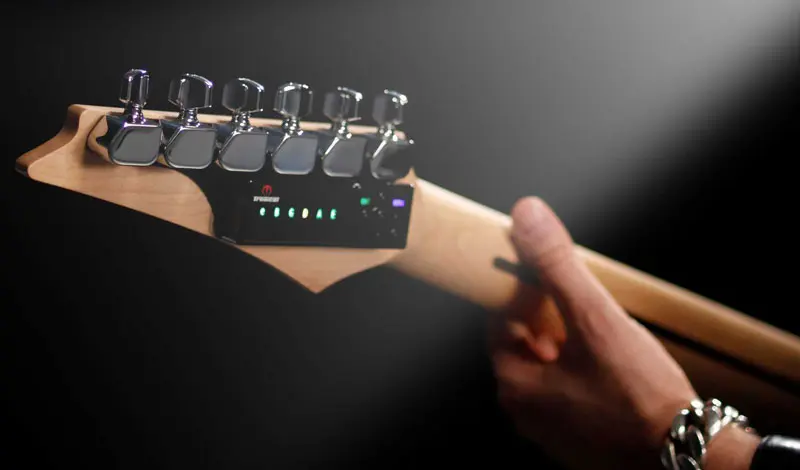
In my search for the perfect tuner, I stumbled upon TronicalTune. This device is a fully automatic guitar tuner that takes the hassle out of the tuning process completely. With its built-in algorithm, it automatically tunes your guitar with just the touch of a button.
While I haven’t used TronicalTune extensively, I’ve seen it in action at a guitar shop. It’s impressive how quickly it can adjust all six strings, allowing you to focus on playing rather than tuning. It’s ideal for those who prefer a “set it and forget it” approach to tuning.
The Journey Continues: Finding My Personal Favorite
After trying out various tuners, I’ve realized that my needs as a guitarist have changed over time. What worked for me a few years ago may not be the best option today. Here’s a breakdown of my favorites based on specific scenarios:
Best for Stage Performances: Boss TU-3 Pedal Tuner
This pedal tuner has become my go-to for live performances. Its robustness and the ability to tune silently make it a lifesaver during sound checks. The built-in effects loop is a bonus, allowing me to keep everything connected without any fuss.
Best for Portability: Snark Clip-On Tuner
For jam sessions and quick tuning at home, I keep coming back to the Snark clip-on tuner. Its compact design means I can toss it in my gig bag without worry. Plus, the fast response time encourages me to tune up before playing to avoid any surprises.
Best for Guitarists on the Go: Smartphone Apps
For those moments when I don’t have my other tuners on hand, I reach for my guitar tuner app. While it isn’t always perfect, it gets the job done in a pinch. I appreciate that I can tune anywhere, anytime, and it’s a great resource for beginners learning the ropes.
Conclusion: Your Journey Awaits
Finding the right guitar tuner is a deeply personal experience, shaped by your playing style, environment, and preferences. As you navigate the vast world of tuners, remember to consider what features matter most to you and test out different models before committing.
From clip-on tuners to advanced options like TronicalTune, there’s a tuning solution for every guitarist. Embrace the journey, and you’ll find a tuner that not only serves you well but enhances your overall playing experience.
Ultimately, the joy of music comes from expressing yourself through your instrument, and the right tuner ensures you’re heard at your best. Happy strumming!
Quick tip: TronicalTune.
Quick tip: a fully automatic tuning option.