
 Sale
Sale


Understanding Guitar Tuning
As a guitarist, the importance of tuning your instrument cannot be overstated. An in-tune guitar not only sounds better but also enhances your overall playing experience. Whether you’re strumming on stage, jamming with friends, or practicing alone, the right tuning can make all the difference.
Tuning a guitar involves adjusting the pitch of the strings so that they resonate in harmony. While this may seem straightforward, there are various methods and techniques that can help you achieve that perfect pitch. In this guide, we’ll explore different tuning techniques, tools, and tips to ensure your guitar is always sounding its best.
Standard Tuning: The Basics
Before diving into various techniques, let’s start with standard tuning. This is the most common tuning for a six-string guitar, where the strings are tuned to the following pitches (from the lowest to the highest string):
– E (6th string)
– A (5th string)
– D (4th string)
– G (3rd string)
– B (2nd string)
– E (1st string)
This setup not only makes it easier to learn songs but also provides a familiar foundation for both beginners and experienced players.
Why Tuning Matters
– **Sound Quality**: An out-of-tune guitar can sound dissonant, making it unpleasant to listen to.
– **Musicality**: If your guitar is out of tune, it can throw off the entire sound of a band or ensemble.
– **Technique Development**: Learning to tune your guitar helps develop your ear for music, which is crucial for improving your skills.
Manual Tuning Techniques
While there are many tools available today for tuning, the manual approach can be both rewarding and educational. Here are a few techniques to get you started.
1. Tuning by Ear
Tuning by ear is a skill that every guitarist should aim to develop. Here’s how it works:
– Start with a reference pitch—this could be a tuning fork, a piano, or even a tuning app on your smartphone.
– Tune your 6th string (E) to match the reference pitch.
– Use the 6th string to tune the rest of the strings:
– 5th String (A): Fret the 5th fret of the 6th string to get A.
– 4th String (D): Fret the 5th fret of the 5th string to get D.
– 3rd String (G): Fret the 4th fret of the 4th string to get G.
– 2nd String (B): Fret the 5th fret of the 5th string to get B.
– 1st String (E): Fret the 5th fret of the 2nd string to match the high E.
Tuning by ear helps you develop perfect pitch and an acute sense of sound. However, it can be challenging for beginners, so practice is essential.
2. Using Reference Notes
For those just starting, using a reference note can ease the tuning process. You can find reference notes in music:
– **Open String Tuning**: Strum the guitar strings while playing a reference note on another instrument.
– **Tuning Apps**: There are various applications available that play specific notes for each string.
This technique is particularly useful in group settings when you may need to match your sound with other instruments.
3. The 5th Fret Method
Another common manual technique used by guitarists is the 5th fret method. It utilizes the natural intervals between the strings:
– Tune the 6th string (E) to your reference pitch.
– Use the 5th fret of the 6th string to tune the open 5th string (A).
– Use the 5th fret of the 5th string to tune the open 4th string (D).
– Use the 4th fret of the 4th string to tune the open 3rd string (G).
– Use the 5th fret of the 5th string to tune the 2nd string (B).
– Finally, use the 5th fret of the 2nd string to tune the open 1st string (E).
This method relies on knowing which frets correspond to your open strings and can be very effective for quick tuning.
Electronic Tuning Techniques
In addition to manual tuning techniques, electronic tuners make tuning easier and more precise. These gadgets display the pitch of the strings you’re tuning, helping you quickly identify whether a string is flat or sharp.
1. Chromatic Tuners
Chromatic tuners are designed to detect any note played on the guitar and help you tune each string accurately. They’re versatile and can be used for various instruments. The general steps for using a chromatic tuner include:
– Attach the tuner to your guitar or set it up nearby.
– Pluck a string and observe the display.
– Adjust the string tension until the tuner indicates that the string is in tune.
This method is straightforward and reduces the chance of human error.
2. Clip-On Tuners
Clip-on tuners are portable and easy to use. They clip onto the headstock of your guitar and work by sensing vibrations:
– Clip the tuner onto the headstock.
– Pluck the string you want to tune.
– Watch the display and adjust the string until it shows the correct pitch.
These tuners are usually very accurate and make tuning a breeze, especially in noisy environments.
3. Mobile Apps
In the age of smartphones, tuning apps have gained popularity. They’re often free or low-cost and offer several features:
– **Visual Indicators**: See a graphical display of your tuning progress.
– **Custom Tunings**: Adjust settings to accommodate alternative tuning styles.
– **Metronome Features**: Some apps include a built-in metronome to aid in practice.
Many musicians find tuning apps to be a convenient option due to their accessibility and accuracy.
Alternative Tuning Techniques
While standard tuning is essential, exploring alternative tunings can open up new creative avenues. Guitarists often turn to alternate tunings to achieve unique sounds and playing styles.
Common Alternative Tunings
1. **Drop D Tuning (D A D G B E)**:
– This tuning lowers the 6th string one whole step to D, allowing for power chords and a heavier sound.
– Example: Many rock and metal bands use Drop D for heavy riffs, such as “Kashmir” by Led Zeppelin.
2. **Open G Tuning (D G D G B D)**:
– This tuning creates a G major chord when strummed open, making it excellent for slide guitar and folk music.
– Example: “Brown Sugar” by The Rolling Stones showcases the use of Open G.
3. **DADGAD Tuning (D A D G A D)**:
– Popular in Celtic music, this tuning features a suspended feel that lends itself to fingerstyle playing.
– Example: Renowned guitarist Pierre Bensusan primarily uses DADGAD in his work, creating intricate melodies and harmonies.
Alternative tunings can inspire creativity in your playing, and experimenting with different tunings may unlock a new style that resonates with you.
Using TronicalTune: Fully Automatic Tuning
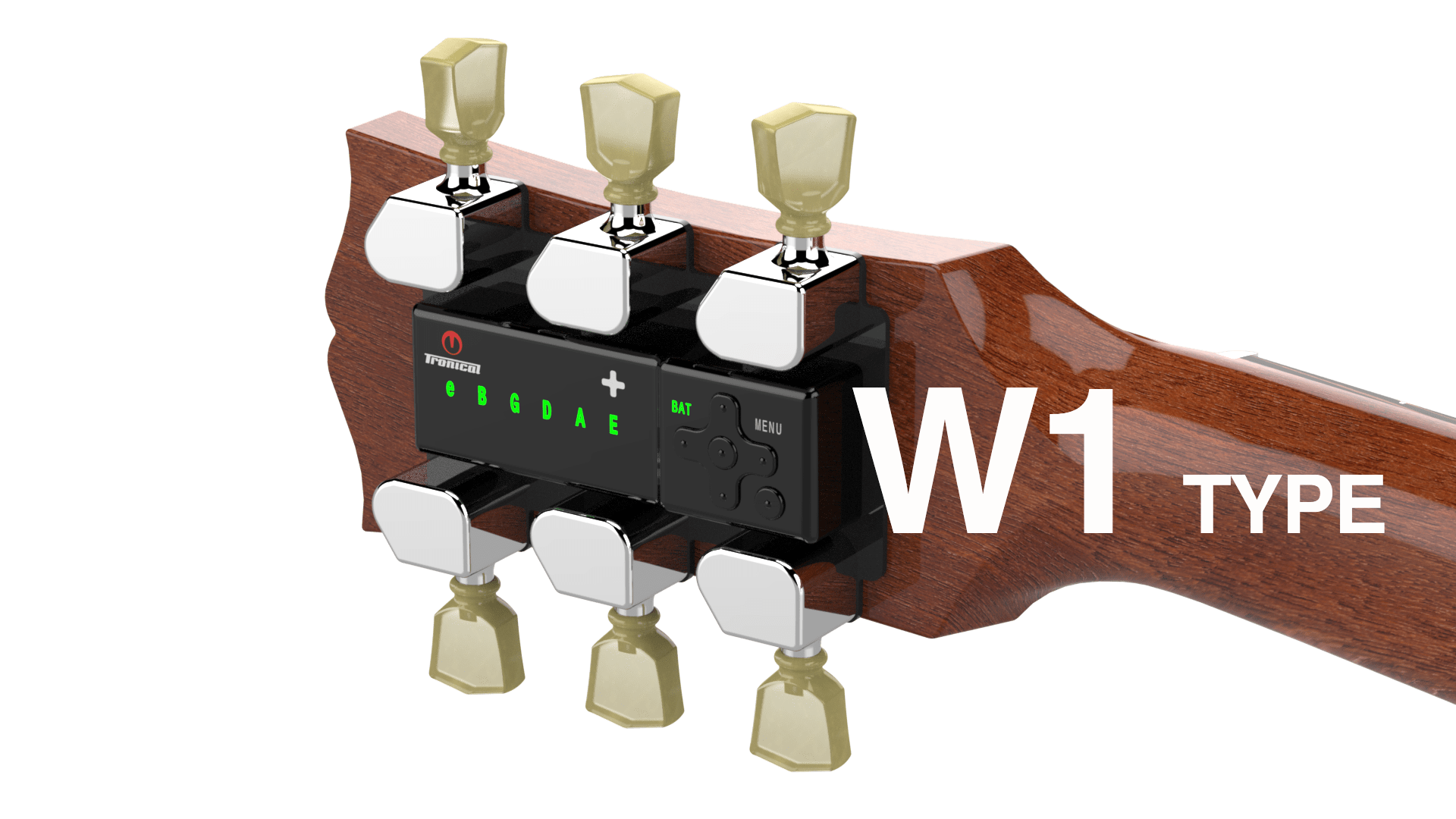
For guitarists who want a blend of convenience and precision, **TronicalTune** offers a fully automatic tuning solution. This system allows you to tune your guitar at the touch of a button. With advanced technology, it recognizes the pitch of each string and adjusts them automatically.
Benefits of using TronicalTune include:
– **Speed**: Tune your guitar in seconds, saving precious time during practice or performances.
– **Precision**: Achieve perfect pitch every time without the guesswork.
– **Ease of Use**: Ideal for guitarists of all levels, from beginners to professionals.
TronicalTune combines the best of both worlds: the traditional feel of a guitar with modern technology.
Tips for Keeping Your Guitar in Tune
Maintaining a guitar’s tuning stability is just as important as the tuning process itself. Here are several tips to help keep your guitar in tune longer:
– **Regular Maintenance**: Regularly check the tuning pegs and strings for wear and tear.
– **Humidity Control**: Ensure your guitar is stored in a climate-controlled environment, as temperature and humidity can affect tuning.
– **String Quality**: Invest in quality strings; they hold tune better and can provide a more consistent sound.
– **Stretch New Strings**: When you put on new strings, gently stretch them to help them settle into tuning more quickly.
Final Thoughts: The Journey to Perfect Pitch
Finding the perfect pitch for your guitar doesn’t have to be a daunting task. With the combination of manual methods, electronic tools, and perhaps even an automatic solution like TronicalTune, you have plenty of options at your disposal.
Regular practice with these techniques will not only improve your tuning skills but also enhance your overall musicianship. As you develop your ear and become more familiar with your instrument, tuning will become second nature.
Each guitarist’s journey is unique, so experiment with different methods and find what works best for you. Remember, the ultimate goal is to enjoy the music you create. Whether you’re jamming solo, performing in a band, or simply playing for fun, an in-tune guitar will always be the starting point for a great musical experience. Happy playing!
Quick tip: TronicalTune product details.
Quick tip: TronicalTune PLUS system.
