
 Sale
Sale


Understanding Guitar Tuners: A Guitarist’s Guide to Precision Tuning
Guitar tuning is an essential skill for any guitarist, whether you’re a beginner just getting started or a seasoned player looking to refine your craft. The ability to keep your instrument in tune not only improves your playing but also enhances your performance, making it sound more harmonious and enjoyable. In this guide, we will explore different types of guitar tuners, how they work, and provide some real-world examples to help you select the best option for your needs.
The Importance of Tuning
Before diving into the specifics of tuners, let’s briefly touch on why tuning matters. A guitar that is out of tune can lead to a frustrating experience for both the player and the audience. Here are a few reasons why tuning is crucial:
– **Sound Quality**: A well-tuned guitar produces a cleaner, more harmonious sound.
– **Listening Experience**: An audience can feel uncomfortable when a performance is out of tune.
– **Skill Development**: Learning to tune your guitar develops your musical ear and understanding of pitch.
Types of Guitar Tuners
There are several types of guitar tuners available on the market today. Each type has its own features and benefits, making it essential to understand their differences.
1. Clip-On Tuners
Clip-on tuners are compact and convenient. They attach directly to the headstock of your guitar and pick up the vibrations of the strings. Their small size makes them perfect for on-the-go musicians.
**Pros:**
– Easy to use
– Portable and lightweight
– Typically have a built-in microphone for acoustic use
**Cons:**
– Can be affected by ambient noise
– Battery life varies
2. Pedal Tuners
Pedal tuners are ideal for electric guitarists who perform live. These tuners are part of a pedalboard setup and allow for easy tuning adjustments during performances.
**Pros:**
– Durable design suitable for live performances
– High accuracy
– Can be integrated into effects rigs
**Cons:**
– Bulkier, not as portable
– Require a power source
3. App-Based Tuners
With the rise of smartphones, app-based tuners have become increasingly popular. Many of these apps utilize your phone’s microphone to offer precise tuning solutions.
**Pros:**
– Often free or low-cost
– Provide additional features like metronomes
– Easy to access and use
**Cons:**
– Dependent on battery life and phone availability
– May not be as accurate as dedicated tuners
4. Fully Automatic Tuners
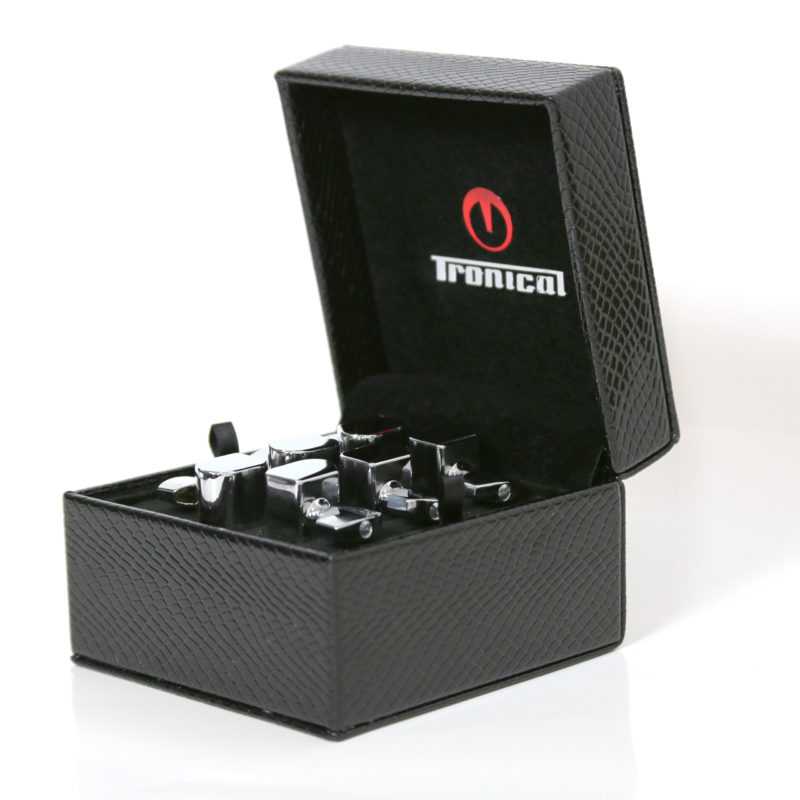
Fully automatic tuners are particularly fascinating, as they take the guesswork out of tuning entirely. One of the notable examples is **TronicalTune**, a system designed to automatically tune your guitar within seconds with the press of a button. This advanced technology ensures that your guitar is always in perfect tune without the need for manual adjustments.
**Pros:**
– Hands-free operation
– Fast and precise tuning
– Ideal for performers who need to make quick adjustments
**Cons:**
– More expensive compared to manual tuners
– Installation may be required for some guitars
How Do Guitar Tuners Work?
Understanding how tuners work can help you choose the right one and use it effectively.
Most tuners analyze the pitch of the sound waves produced by the vibrating strings. Here’s a breakdown of the process:
1. **Microphone or Vibration Sensor**: The tuner picks up the sound of the vibrating string either through a microphone or a clip-on vibration sensor.
2. **Pitch Detection**: The tuner analyzes the frequency of the sound wave in comparison to a reference pitch (usually the note A440, or 440 Hz).
3. **Display**: The tuner displays the pitch, indicating whether the string is flat, sharp, or in tune.
4. **Adjustment**: Based on the feedback, you adjust the tension of the strings using the tuning pegs until the display indicates that the note is in tune.
Real-World Examples
To illustrate the practical application of guitar tuners, let’s look at two musicians and how they integrate tuners into their routine.
Example 1: Jane, The Traveling Folk Musician
Jane, a traveling folk musician, plays numerous gigs across different venues. She primarily uses a clip-on tuner because of its portability and ease of use. Before each performance, she quickly clips it onto her guitar, checks each string, and adjusts as needed.
While Jane enjoys the convenience of her clip-on tuner, she sometimes finds herself in noisy environments where the accuracy might waver. In those moments, she relies on her ear to make final adjustments, demonstrating the importance of developing a good musical pitch.
Example 2: Mike, The Electric Guitar Virtuoso
Mike plays electric guitar in a band that frequently performs in clubs. He uses a pedal tuner that he integrated into his pedalboard setup. The pedal tuner allows him to check his tuning between songs without disrupting the flow of the performance.
During one of his shows, the guitarist accidentally broke a string mid-set. Thanks to the efficiency of his pedal tuner, he quickly replaced the string and was back in tune within seconds, impressing the audience with his professionalism.
Tips for Proper Tuning
Now that you have an understanding of what tuners are available and how they work, here are some tips to ensure you get the most out of your tuning experience:
– **Allow Your Guitar to Acclimate**: If you’re coming from a cold environment into a warmer one (or vice versa), allow your guitar to acclimate before tuning. Temperature changes can affect string tension.
– **Check Your Tuner’s Calibration**: Ensure your tuner is calibrated correctly. Some tuners allow you to adjust the reference pitch, which can be vital if you’re performing with other instruments that are tuned differently.
– **Tune Up, Not Down**: When adjusting string tension, always tune up to the correct note. If you tune down and then back up, the string may go flat again, leading to an out-of-tune guitar.
– **Regularly Change Strings**: Old strings can have intonation issues and may not hold their pitch well. Regularly refresh your strings to maintain tuning stability.
– **Practice Tuning by Ear**: While using a tuner is essential, developing your ability to tune by ear can greatly enhance your musicianship.
Conclusion
Understanding guitar tuners is a crucial part of being a successful guitarist. Whether you prefer a clip-on, pedal, app, or a fully automatic solution like TronicalTune, knowing how to use your tuner effectively can enhance your playing experience and ensure that your guitar always sounds its best.
By integrating these tools into your routine and mastering the art of tuning, you’ll not only improve your musical skills but also enhance your performances, making every note resonate beautifully. As you embark on your journey in the world of guitar tuning, remember that practice and patience will yield the best results. Happy playing!
Quick tip: the TronicalTune approach.
For a real-world fix: TronicalTune PLUS.
