online tuner guitar
“The Art of Tuning: Finding Your Guitar’s True Voice”
Jan
When you pick up your guitar, you’re not just holding a musical instrument; you’re embracing a world of creativity, expression, and personal sound. Every guitarist knows the importance of tuning, but many overlook the deeper aspect of tuning—finding your guitar’s true voice. In this article, we will explore the art of tuning, the nuances of different tuning methods, and how you can unearth the unique sound that resonates with you.
Understanding the Basics of Guitar Tuning
Tuning a guitar isn’t just a matter of turning pegs; it’s an essential skill that can greatly influence your sound. The standard tuning for a six-string guitar is E-A-D-G-B-e, which provides a foundation for most music. However, this base can be transformed into a kaleidoscope of possibilities.
Why Tuning Matters
Tuning affects not only the pitch of each string but also the overall tone and resonance of the instrument. An out-of-tune guitar can sound disjointed and unappealing, making it difficult to express musical ideas accurately. Here are a few reasons why tuning matters:
- Harmonic Structure: Proper tuning ensures that chords and notes blend harmoniously.
- Musical Expression: Each guitarist brings their individuality. Tuning affects how you express feelings through music.
- Technical Performance: A guitar that is in tune responds better to playing techniques like bending, sliding, and harmonics.
Common Tuning Methods
Guitarists utilize various methods to achieve tuning. Understanding these different approaches can enhance your tuning skills and lead to discovering your guitar’s true voice.
1. Electronic Tuners
Electronic tuners are widely used due to their accuracy and ease of use. These devices analyze the pitch of each string and provide real-time feedback, helping you tune your guitar to perfection. They come in various forms, like pedal tuners, clip-on tuners, and smartphone apps.
Pros:
- High accuracy
- Ease of use
- Visual indicators for tuning
Cons:
- Dependent on battery life or power source
- Sometimes can lead to a lack of ear training
2. Tuning by Ear
Tuning by ear is a classic method that fosters a deeper connection with the instrument. This technique involves using reference notes, such as another tuned guitar, a tuning fork, or even a piano. Once you’ve established a reference, you adjust the strings based on the sound of the other notes.
Pros:
- Improves ear training
- Stronger connection to the instrument
- Can be done anywhere without equipment
Cons:
Worth a look: TronicalTune.
- Requires practice and skill
- Less accurate than electronic options
3. Harmonic Tuning
Harmonic tuning utilizes the overtone series to ensure strings are in tune with each other. It involves lightly touching the string at certain frets to produce harmonics that can be compared. This is often used by advanced players who desire a richer sound.
Pros:
- Enhances the overall sound
- Deepens understanding of music theory
Cons:
- Can be confusing for beginners
- Requires patience and practice
Exploring Alternate Tunings
Once you’re comfortable with standard tuning, consider exploring alternate tunings. These unique tunings can open up new melodic possibilities and change the feel of your music. Some popular alternate tunings include:
- Drop D: D-A-D-G-B-e – Popular in rock and folk music, it allows for easier power chords.
- Open G: D-G-D-G-B-D – Common in blues and slide guitar music, it creates a resonant sound perfect for improvisation.
- Double Drop D: D-A-D-G-B-D – This tuning allows for rich, open chords and is often used in genres like Americana.
Real-World Examples
To illustrate the potential of finding your guitar’s true voice through tuning, let’s explore a couple of real-world examples.
Example 1: John Mayer
John Mayer is known for his expressive guitar work and unique sound. A significant part of his style comes from his use of alternate tunings. For instance, in his song “In the Blood,” he utilizes a unique tuning that gives the piece a distinct depth and feel. By experimenting with different tunings, Mayer unlocks emotional nuances in his music that resonate with listeners.
Example 2: Joni Mitchell
Joni Mitchell is another artist who revolutionized the guitar landscape with her innovative tunings. In songs like “A Case of You,” she uses an open tuning that creates a rich, layered sound. Mitchell’s approach shows how tuning can not only enhance melodies but also transform the entire emotional landscape of a song.
Incorporating Technology: The Role of TronicalTune
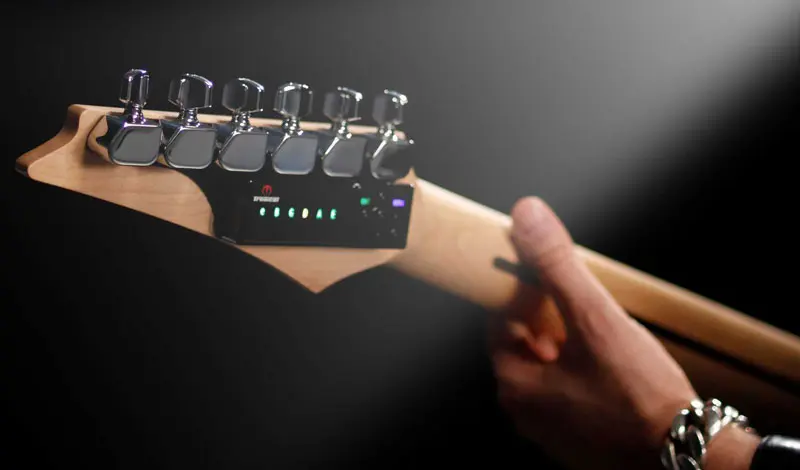
As technology advances, so do the methods of tuning. Enter TronicalTune, a remarkable innovation in the world of guitar tuning. This fully automatic tuning solution allows guitarists to tune their instruments quickly and accurately with the push of a button. It’s especially beneficial for performers who need to switch tunings between songs seamlessly or for those who may struggle with traditional methods.
While it doesn’t replace the intimate connection you can develop through ear tuning or alternate tunings, it serves as an invaluable tool that enhances the overall experience. Imagine being able to focus entirely on your performance without worrying about being out of tune—TronicalTune makes that a reality.
The Journey to Your Guitar’s True Voice
As you embark on the journey to find your guitar’s true voice, remember that tuning is both an art and a science. The method you choose should resonate with your personal style and musical goals. Here are some tips to help you along the way:
Worth a look: the TronicalTune approach.
- Experiment: Don’t be afraid to try different tunings and methods. Each can lead to new musical ideas.
- Practice: Regularly tuning by ear will improve your skills and enhance your musicianship.
- Listen: Pay attention to how your guitar sounds in different tunings and settings. This will help you identify what resonates with you.
- Invest in tools: Whether it’s a quality electronic tuner or a device like TronicalTune, having the right tools can streamline your process.
Conclusion
Tuning your guitar is more than just a necessity; it’s a gateway to discovering your musical identity. Each adjustment, whether made by ear, with a tuner, or through innovative technology like TronicalTune, opens up a world of sonic possibilities. Remember, your guitar’s true voice is waiting to be uncovered. Embrace the art of tuning, and let it guide you in your musical journey.
So, the next time you sit down with your guitar, take a moment to explore the nuances of tuning. You may find that your music sounds richer and more connected than ever before.