Will an Automatic Guitar Tuner Fit in Your Case or Wall Hanger?
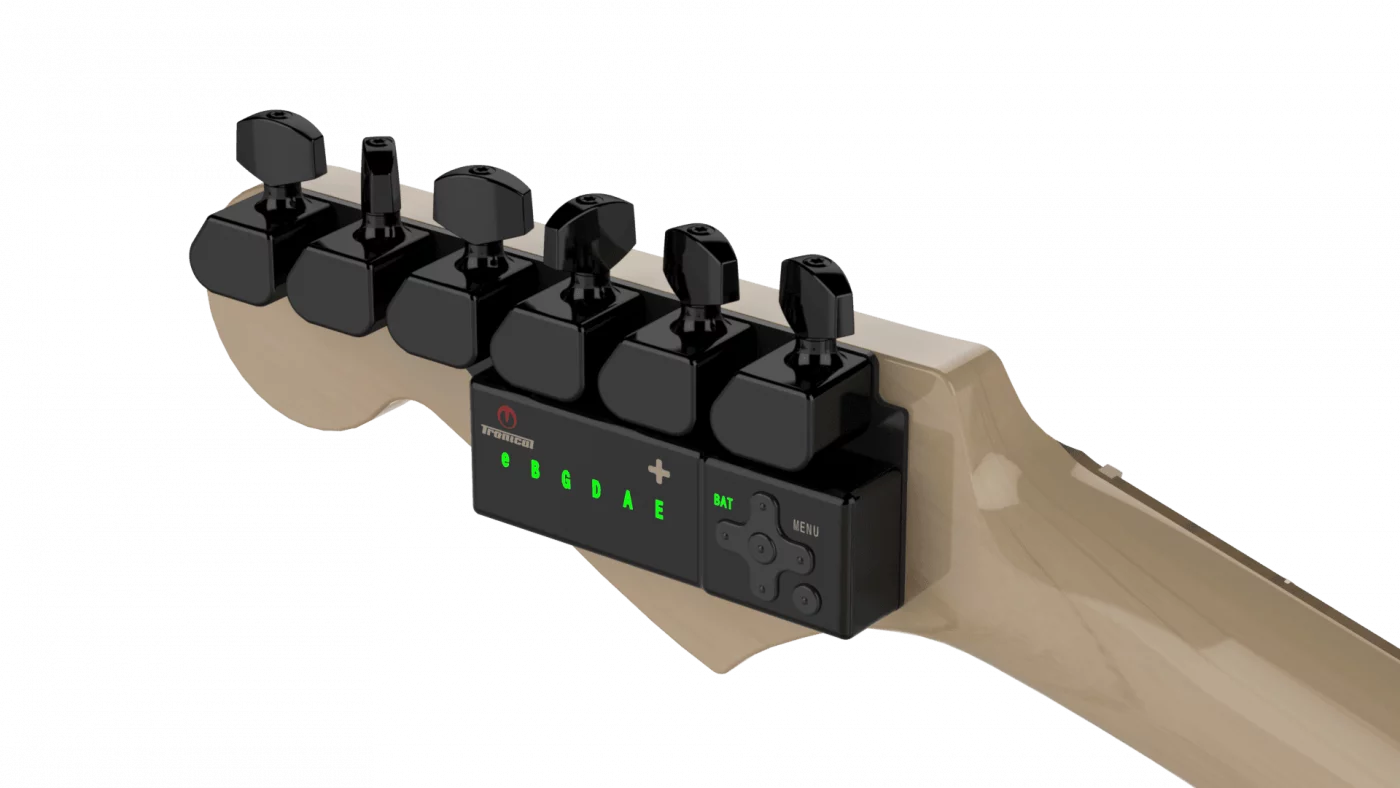
If you are used to clip-on tuners, this question is easy to miss: an automatic guitar tuner does not just read pitch. A system such as TronicalTune detects the note and then turns motorized machine heads to make the correction. That means the back of the headstock can end up deeper or shaped differently than it was with standard tuners.
So the short answer is: maybe, but do not assume it. There is no universal yes or no for every hard case, gig bag, rack, or wall hanger. You need to separate two different checks. First, does the tuner system match your guitar headstock and mounting pattern? Second, once installed, will the added rear hardware clear your storage setup?
Mounting fit and storage fit are not the same thing
TronicalTune already has a clear process for checking whether a unit fits the guitar itself. The company asks buyers to compare the correct template to the actual headstock and check details such as tuner layout, spacing, hole diameter, thickness, and orientation. You can start that process here: find the right automatic guitar tuner for your guitar.
That template step is about installation fit. It tells you whether the Contacting PCB and motorized PowerHeads belong on that guitar. It does not confirm whether your molded case lid, neck cradle, accessory compartment edge, rack slot, or wall hanger will leave enough room after installation.
This matters because the rear hardware changes after installation. TronicalTune's installation pages show a PCB mounted on the back of the headstock, with motorized tuners inserted through the headstock. In other words, storage clearance is a real follow-up question, not an edge case.
How to do a simple clearance check at home
The most useful approach is also the simplest. Measure the rear depth at the headstock area and compare it with the free space in your storage.
- Measure from the back surface of the headstock wood to the furthest point of the installed tuner assembly. Before installation, use the template to check the mounting fit. If storage space looks tight, ask TronicalTune support for guidance before ordering. A two-dimensional fit template alone does not show the final depth behind the headstock.
- Check where your case, bag, or hanger actually contacts the guitar. Do not measure empty air in the wrong place.
- Compare the two numbers and leave a little margin so the hardware is not pressed under normal use.
A ruler works, and a caliper is even better. TronicalTune's templates for some six-in-line types include side-view drawings and a maximum permitted headstock thickness at the mounting area, which is another reminder that headstock geometry is specific, not universal.
What to inspect in a hard case or gig bag
Hard cases deserve the closest look because their interiors are often shaped around the neck and headstock. Some molded Fender cases, for example, use a foam interior nest and an extended neck cradle. That kind of support can be excellent for protection, but it also creates defined pressure points. When you first test fit a guitar with motorized tuners, close the lid gently and check whether the headstock pad, neck cradle, or accessory-pocket edge presses against the back hardware.
Gig bags can be more forgiving, but not always. Thick padding and adjustable neck rests may absorb a little extra bulk better than a rigid shell, yet the exact bag design still matters. If your bag has a raised neck support, make sure the support lands under the neck where it should, rather than pushing into the back of the headstock assembly.
If your guitar already fits a tight case with very little room at the headstock, treat that as a sign to measure carefully before you buy.
Wall hangers and racks need a different check
Wall storage is less about a closing lid and more about contact points. A pivoting yoke style hanger can be more forgiving because it adapts to headstock shape. A fixed design that holds the guitar closer to the wall may leave less room for added rear depth.
Look for two things: where the yoke touches the headstock, and how close the back of the headstock sits to the wall. If the guitar hangs near-flush to the wall, extra tuner bulk can become the limiting factor even when the hanger itself grips the neck correctly.
Racks deserve the same kind of attention. Check whether the guitar leans against a rear rail, foam strip, or divider near the headstock area. A tuner that clears one rack may not clear another with a different angle or support height.
Check each guitar layout on its own
Do not assume that one successful setup answers the question for every guitar you own. TronicalTune treats six-in-line and 3+3 layouts separately in its fit system because spacing and layout differ. That is enough reason to check each guitar individually when you are thinking about storage clearance too.
That does not mean one layout is better or worse. It simply means the exact guitar and the exact storage product matter.
Before ordering, check the correct fit template and look at the available space in your hard case, gig bag, rack or wall hanger. If anything looks tight, read TronicalTune’s installation information and ask support for guidance. The fit template alone cannot confirm the final storage clearance.

Sources
- Knowledge Base - Guitar Tuner Fully Automatic - Retrofit for Any Guitar | TronicalTune
- Find the Right Automatic Guitar Tuner for Your Guitar
- TronicalTune Installation | Install Your Automatic Guitar Tuner
- # Type C1 Reverse headstock
- Deluxe Molded Case - Stratocaster®/Telecaster® – Fender
- Troubadour™ Electric Guitar Gig Bag – Fender
- Essentials Guitar Wall Hanger – Fender
- Case Closed: Storage Tips to Save Your Guitars