Locking Tuner Fit: Practical Checks Before Installing TronicalTune
When you are looking at locking tuner fit for TronicalTune, the main question is not whether your current tuners lock. The real question is whether the guitar’s headstock can accept the system’s own hardware through the existing holes, with enough space on the back for the electronics and mounting parts. TronicalTune’s automatic tuning system replaces the original machine heads rather than sitting on top of them, so the exact guitar matters more than the brand name on the headstock.
For readers who are still getting familiar with automatic tuning, the TronicalTune homepage is the best place to start. It explains the basic idea: the system detects pitch, then its motorized tuners adjust each string to the target tuning.

Locking tuner fit: start with the exact guitar
TronicalTune says fit depends on the actual headstock, not on tuner type alone. That means a guitar with locking tuners is not automatically compatible, and a guitar with standard tuners is not automatically incompatible. What matters is the combination of headstock shape, tuner-hole spacing, hole size, and rear clearance. The company also notes that a model can still fail to fit if the spacing changes by year, factory, or special edition, so the exact instrument should be checked against the correct template.
The most useful first step is to compare your guitar with the printable template before ordering. TronicalTune’s installation page explains that every tuner hole must align with the PCB, and that the correct type should be verified against the template in advance. The knowledge base also points to a required 8.6 mm tuner-hole size in the relevant templates. You can also review the knowledge base for fit notes and template details.
If the guitar is in doubt, front and rear photos are worth sending to support before you buy. That is especially helpful when the headstock shape looks close, but the layout is unusual.
What comes off before the system goes on
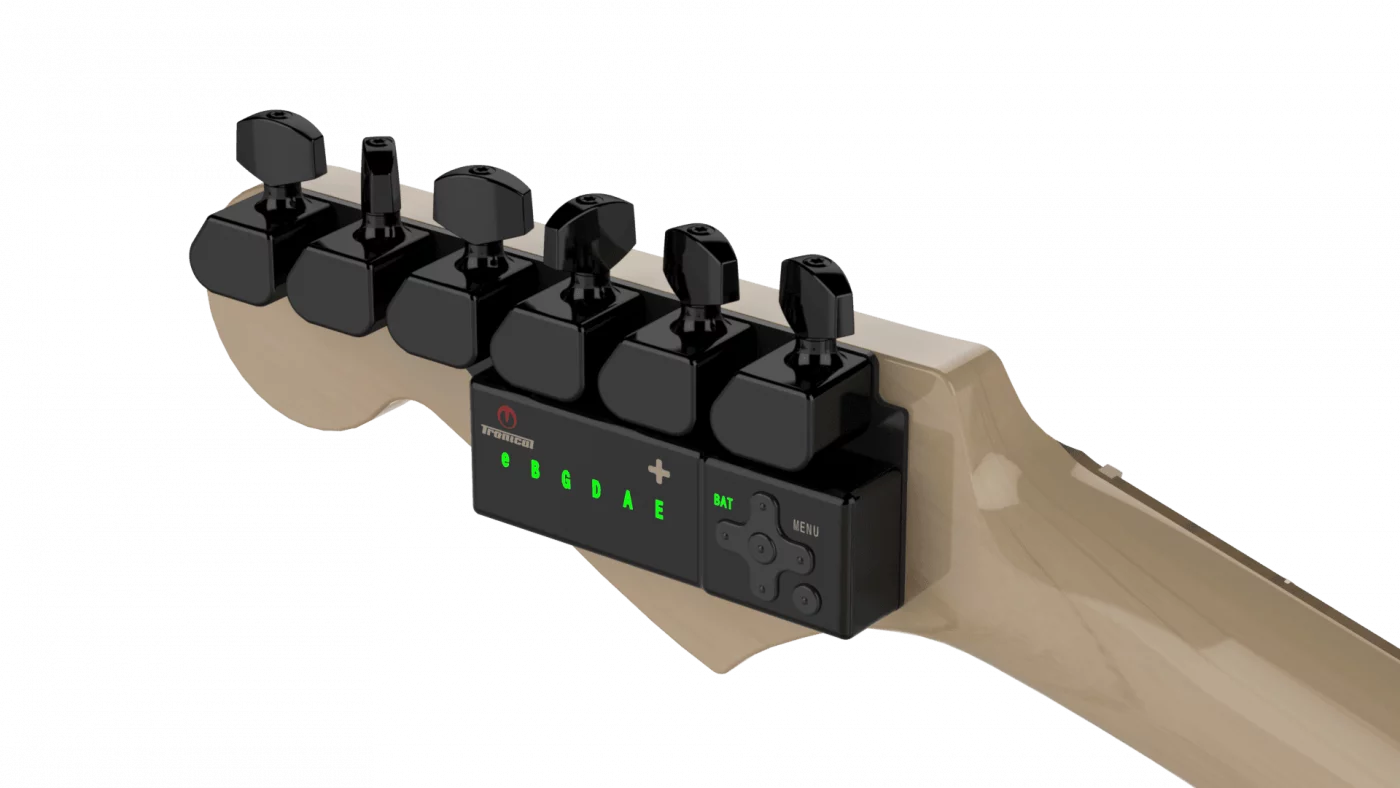
One point is easy to miss: the original machine heads come off first. TronicalTune does not work as an add-on that leaves locking tuners in place. Instead, its RoboHeads replace the existing tuners and pass through the same general tuner-hole area, with the PCB mounted on the rear of the headstock.
That matters for two reasons. First, you need the correct hole alignment so the new hardware sits properly. Second, you need enough room behind the headstock for the PCB, washers, and nuts. So locking tuner fit is really a fit check for the whole rear-headstock assembly, not just the visible front side.
The installation sequence described in TronicalTune’s manual is simple in concept: place the contacting PCB on the rear of the headstock, insert the RoboHeads through the tuner holes, then fit washers and nuts. If that rear area is crowded by a thick volute, unusual carving, or limited flat space, the system may not sit correctly.
Rear clearance and headstock layout
Rear clearance is often the deciding factor for locking tuner fit. A headstock can look normal from the front and still be unsuitable at the back. The PCB and mounting parts need a clean, usable surface, and the tuner shafts need to pass through without forcing the layout.
Here is the practical way to think about it:
- Check the tuner-hole diameter against the required template.
- Check that the spacing between holes matches the exact model template.
- Check that the back of the headstock has enough room for the PCB and hardware.
- Check that the headstock thickness falls within the system’s requirements.
These checks sound technical, but they are there to prevent a poor mechanical match. TronicalTune says that if holes need adjustment, a qualified guitar workshop should assess the work first. The company does not present fit as universal, and it does not promise a no-modification install in every case.
For a closer look at how the parts sit on the guitar, the how it works page gives useful context on the automatic tuning process and the hardware involved.
Template match before you order
The safest workflow is straightforward. First, identify your exact guitar version. Second, compare it to the correct printable template. Third, measure the tuner holes and inspect the rear of the headstock. Only then does it make sense to decide whether the system is a candidate for that instrument.
This is where many compatibility questions get answered. A guitar may share the same model name as a known fit, but a different year or factory run can still change the spacing. That is why TronicalTune asks for photos and measurements when there is any doubt, rather than treating every example of a model as identical. In other words, locking tuner fit is decided by the guitar in front of you, not by the label on the truss-rod cover.
If you want a quick self-check before making contact, the company’s compatibility check page is a practical next step. It is especially useful when you are unsure whether your headstock falls inside the template range.
For a reader with locking tuners already installed, the key takeaway is simple. Do not assume the existing tuners define the fit, and do not assume the system can stay in place around them. Check the exact headstock, confirm the template, and inspect rear clearance first. If the template does not match, ask support rather than trying to force the hardware into place.