stage guitar tuner
“The Importance of Accurate Tuning: A Guitarist’s Guide to Choosing the Right Tuner”

Jan
The Importance of Accurate Tuning: A Guitarist’s Guide to Choosing the Right Tuner
As a guitarist, whether you’re a beginner or a seasoned professional, one of the most fundamental skills you must possess is tuning your instrument. Accurate tuning is crucial for achieving a great sound, enhancing your playing experience, and ensuring your guitar blends well with other instruments. This guide explores the importance of accurate tuning, the various types of tuners available, and tips for selecting the right one for you.
Why Accurate Tuning Matters
Accurate tuning is essential for several reasons:
- Sound Quality: A well-tuned guitar produces clear, harmonious notes. When strings are out of tune, the sound can be jarring and unpleasant.
- Playability: Tuning your guitar correctly enhances your ability to play various songs and styles. It allows you to focus on technique rather than worrying about how the notes sound.
- Collaboration: If you play with other musicians, being in tune is vital. Otherwise, your performance can clash with theirs, making it difficult to create a cohesive sound.
Tuning might seem minor compared to the intricacies of playing technique or songwriting. However, neglecting it can undermine your efforts and lead to frustration.
Types of Guitar Tuners
When it comes to tuners, there are several types, each with its own advantages and disadvantages. Understanding these options will help you select the best tuner for your needs.
1. Clip-on Tuners
Clip-on tuners are popular among guitarists for their convenience and portability. They attach to the headstock of your guitar and detect vibrations to provide an accurate tuning reading.
**Pros:**
– Easy to use
– Compact and portable
– Provides real-time feedback
**Cons:**
– Limited visibility in bright light
– May not work well on some acoustic guitars
2. Pedal Tuners
Pedal tuners are favored by electric guitarists, especially those who perform live. These tuners sit on the floor and connect directly to your guitar signal.
**Pros:**
– Durable and reliable for on-stage use
– Accurate and often features a bypass mode
– Easy to see during performances
**Cons:**
– Less portable
– Requires a power source or batteries
3. App-based Tuners
With the prevalence of smartphones, app-based tuners have become increasingly popular. These applications can turn your phone into a powerful tuning device.
**Pros:**
– Typically free or low-cost
– Offers additional features like metronomes or chord diagrams
– Highly portable
**Cons:**
– Requires a charged device
– May not be as accurate as dedicated tuners
4. Fully Automatic Tuners
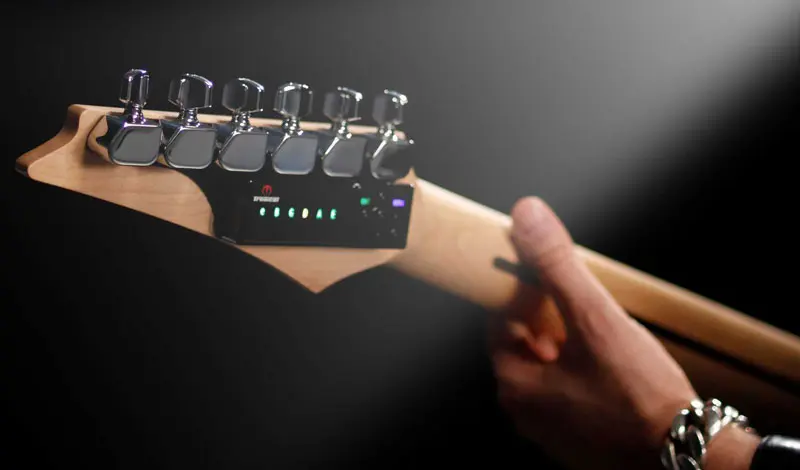
Among the most innovative solutions today are fully automatic tuners. One such example is the **TronicalTune**, which adjusts the guitar’s tuning with the touch of a button, making it an excellent choice for those who need precision without hassle.
**Pros:**
– Effortless tuning process
– Ideal for quick adjustments
– Maintains tuning stability effectively
**Cons:**
– Higher price point
– May require an initial setup
Choosing the Right Tuner for You
When selecting a tuner, consider the following factors to ensure you find the best tool for your guitar-playing needs:
1. Type of Guitar
Different tuners may work better with various types of guitars. For example, if you play an acoustic guitar, you may prefer a clip-on tuner, while electric guitarists might lean toward pedal tuners for live performances.
2. Playing Environment
Think about where you’ll most often be tuning your guitar. If you frequently perform in dimly lit venues, a pedal tuner with bright LEDs might be the best choice. Conversely, for home practice, a clip-on tuner or app could work perfectly.
3. Your Budget
Tuners can vary widely in price. Determine how much you’re willing to invest, and keep in mind that spending a bit more on a quality tuner can save you from frustration later on.
4. Features
Look for features that suit your needs. Do you want a tuner that can also serve as a metronome? Or perhaps one that provides alternate tuning options? Research the specifications to ensure your choice aligns with your playing style.
Real-World Examples
To illustrate the importance of having the right tuner, let’s consider a couple of real-world scenarios.
Scenario 1: The Band Rehearsal
Imagine a situation where a band is rehearsing for a gig. Everyone is pumped, and they’re ready to jam. However, one guitarist shows up with an outdated app-based tuner that struggles to keep up with the tempo of the rehearsal. It takes him several minutes to get his guitar in tune, causing frustration among the band members. In contrast, another band member uses a reliable clip-on tuner and is ready to play in moments. This difference in tuning efficiency can affect the overall productivity of the rehearsal.
Scenario 2: The Live Performance
At a live concert, time is crucial. A guitarist using a pedal tuner finds it easy to make quick adjustments between songs. Meanwhile, another guitarist who relies on a smartphone app is scrambling to find the right setting amidst the stage lights and noise. The ability to manage tuning efficiently can make a significant difference in a live setting, ensuring smooth transitions and keeping the audience engaged.
Tips for Maintaining Tuning Accuracy
Once you’ve chosen your tuner, consider these tips to maintain accurate tuning:
- Regularly Change Strings: Old strings can go out of tune more quickly, so replace them regularly.
- Check Tuning Frequently: Make it a habit to check your tuning often, especially before performances.
- Store Your Guitar Properly: Temperature and humidity can affect tuning stability. Store your guitar in a stable environment.
- Learn to Tune by Ear: While tuners are helpful, developing your ability to tune by ear can make you a versatile musician.
Conclusion
Accurate tuning is a vital aspect of being a successful guitarist. The right tuner can enhance your playing experience by ensuring you always sound your best. Whether you opt for a clip-on tuner, pedal tuner, app, or a fully automatic solution like TronicalTune, choosing one that fits your needs will empower you as a musician. By understanding the importance of tuning and the various tools available, you can set yourself up for musical success. Happy playing!
Worth a look: a fully automatic tuning option.
For a real-world fix: TronicalTune system.