Guitar Tuner Pro
Finding Your Foothold: The Importance of an Accurate Guitar Tuner

Jan
Understanding the Importance of an Accurate Guitar Tuner
When it comes to playing guitar, whether you’re strumming chords for your favorite songs or embarking on a solo journey of creativity, one thing is non-negotiable: tuning. An accurate guitar tuner is an essential tool for any guitarist. Not only does it help ensure your instrument sounds its best, but it also plays a significant role in your development as a musician.
Why Tuning Matters
Imagine stepping onto a stage, ready to share your music with an audience. You strum a few chords, and instead of resonant harmonies, you hear a cacophony of sour notes. The experience is not only embarrassing but can also detract from the emotional connection you aim to create through your music. Proper tuning is a foundation for everything you do on the guitar.
The Emotional Connection
Music is a form of expression, and when your guitar is out of tune, it can disrupt that expression. Think about attending a concert where the guitarist’s strings are a half-step off. Instead of enjoying the artistry, you find yourself distracted by the discordance, pulling you away from the intended emotional impact.
Properly tuned instruments create a harmonious environment, allowing the musician and audience to truly connect. Whether you’re playing a heartfelt ballad or an upbeat rock tune, the right tuning sets the tone—literally and figuratively.
The Technical Aspect
Tuning also impacts the technical precision of your playing. An instrument in perfect tune facilitates better chord transitions, clearer notes, and overall more polished performances. For instance:
– **Chord Clarity**: When all strings are in tune, the notes played are more defined, allowing your chords to ring out beautifully.
– **String Intonation**: An accurate tuner helps maintain string intonation, ensuring that your notes are in tune across the fretboard.
– **Improved Playability**: Playing a well-tuned guitar is simply more enjoyable. You’ll find yourself more inclined to practice and experiment with new techniques.
Types of Guitar Tuners
There are several types of guitar tuners available today, each with its own set of advantages and disadvantages. Understanding these can help you choose the right one for your needs.
Clip-On Tuners
Clip-on tuners have become increasingly popular due to their convenience and accuracy. They attach directly to your guitar’s headstock and pick up vibrations from the instrument, allowing you to tune without background noise interference.
**Pros:**
– Portable and easy to use
– Accurate and quick tuning
– Inexpensive
**Cons:**
– May not work well in very noisy environments
Pedal Tuners
Often used by electric guitarists, pedal tuners provide a stable tuning solution with a larger display, making them easy to read on stage.
**Pros:**
– Highly accurate and reliable
– Can handle multiple instruments with ease
– Great for live performances
**Cons:**
– Less portable than clip-on tuners
– Can be more expensive
Mobile Apps
With smartphones being ubiquitous, many musicians opt for tuning apps. These apps use the phone’s microphone to detect pitch and guide you in tuning.
**Pros:**
– Accessible and often free
– Various features, including alternate tunings
**Cons:**
– Dependent on your phone’s battery and microphone quality
– Can struggle in noisy environments
Full Automatic Solutions
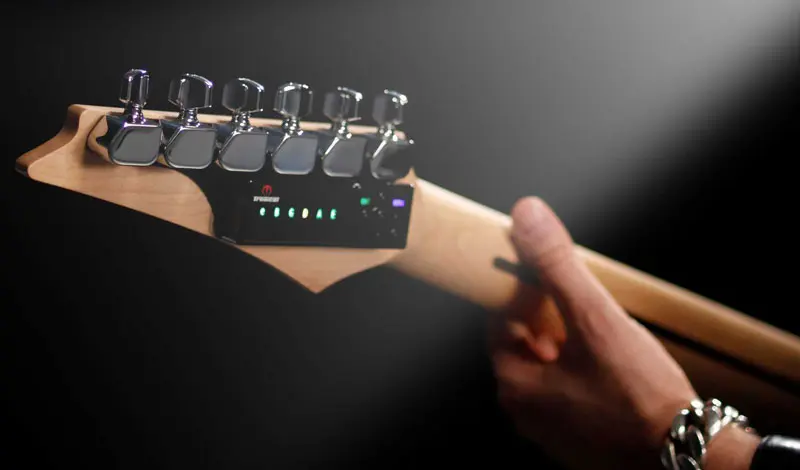
For those who want to go a step further, fully automatic tuners like TronicalTune offer a high-tech solution. This device automatically tunes your guitar at the touch of a button, providing a quick and efficient way to ensure perfect tuning every time. While it’s not a necessity for every player, it can be a game-changer for those who need their instrument ready in an instant.
Real-World Examples
To illustrate the importance of having an accurate guitar tuner, let’s take a look at a couple of real-world examples.
Example 1: A Rising Star
Meet Sarah, a young musician who plays at local cafes and open mics. In her early performances, she often struggled with tuning. Despite her best efforts to tune her guitar manually, she would sometimes arrive on stage only to discover that one string had slipped out of tune during transit.
After a concert where her guitar was noticeably off-key, Sarah invested in a clip-on tuner. The difference was profound. She could check her tuning quickly before each set, and her confidence soared. Audiences began to notice her improved sound, and her gigs became more frequent.
Example 2: Band Dynamics
On the other side of the spectrum, there’s Jake, a guitarist in a rock band. His band often played loud shows where the noise level made it difficult to rely on standard tuners. The band used a pedal tuner, which not only allowed Jake to tune easily during practice sessions but also gave him peace of mind during performances.
One night, they played a big venue. Halfway through their set, they noticed some instruments were not blending well, primarily due to one guitar being out of tune. Thanks to the pedal tuner, they could quickly solve the issue without losing momentum, leading to a killer performance.
Developing Your Tuning Skills
While using a tuner is essential, developing your ear for pitch and tuning is equally important. Here are some steps you can take to enhance your tuning skills:
Learn to Tune by Ear
Using a reference pitch, like an electronic tuner or another instrument, you can practice tuning your guitar by ear. Play the fifth fret of the low E string to tune the A string, and then use the fifth fret of the A string to tune the D string, and so forth. This method gives you a deeper understanding of how strings relate to one another.
Practice with Different Tunings
Exploring alternate tunings can improve your sense of pitch. Experiment with open tunings or drop D tuning, which can enhance your versatility and sharpen your ear.
Regularly Check Your Tuner
It’s easy to take your tuning device for granted. Make it a habit to check the calibration of your tuner regularly. Over time, tuners can drift slightly, affecting accuracy.
The Journey Ahead
Tuning is much more than just a technical requirement; it’s a critical element of musicality, performance, and personal growth as a guitarist. Whether you choose a traditional clip-on tuner or experiment with innovative solutions like TronicalTune, having confidence in your tuning process can positively influence your entire playing experience.
In a world filled with distractions, let tuning be your foothold—a reliable step toward creating beautiful music. So take the time to invest in an accurate guitar tuner, develop your skills, and encounter the wonders that properly tuned strings can bring to your journey as a musician. Your guitar deserves it, and so do you.
Practical option: TronicalTune product details.
If you want to go deeper: a fully automatic tuning option.