Tuner Guitar
“The Importance of a Reliable Guitar Tuner: A Guide for Every Musician”

Jan
Understanding the Essential Role of a Guitar Tuner
For musicians, tuning an instrument is as crucial as playing it. The importance of a reliable guitar tuner cannot be overstated. Whether you’re a beginner strumming your first chords or a seasoned professional laying down complex solos, having your guitar in tune is fundamental to making music that resonates with both you and your audience.
### Why Tuning Matters
When a guitar is out of tune, the sound it produces can be jarring. Even the most skilled guitarist can sound off if their instrument isn’t properly tuned. Tuning affects responsiveness, playability, and, ultimately, the music you create. Here are some points to consider regarding the need for a reliable guitar tuner:
– **Improved Sound Quality:** A well-tuned guitar delivers clear and harmonious tones.
– **Enhanced Playability:** The notes played will resonate properly, making it easier to perform songs accurately.
– **Positive Performance Experience:** Musicians are less likely to feel frustrated or distracted when their instrument is in perfect pitch.
### The Types of Guitar Tuners
Now that we understand the significance of tuning, let’s explore the different types of guitar tuners available on the market:
#### Clip-On Tuners
Clip-on tuners are small devices that attach to the headstock of your guitar. They work by picking up vibrations from the instrument. These tuners are portable and great for on-the-go musicians.
**Pros:**
– Typically accurate
– Easy to use
– Portable
**Cons:**
– Limited visibility in bright sunlight
#### Pedal Tuners
Pedal tuners are used primarily by electric guitarists. They’re placed on a pedalboard and can be activated with a footswitch. These tuners are known for their durability and are often more precise.
**Pros:**
– Highly accurate
– Designed for live performances
– Usually include true bypass features
**Cons:**
– Bulkier than clip-on tuners
– Higher price point
#### App-Based Tuners
With smartphones becoming ubiquitous, many musicians now rely on tuner apps available for iOS and Android. These apps utilize the device’s microphone to detect pitch.
**Pros:**
– Always available if you have your phone
– Often have additional features like metronomes
**Cons:**
– May require additional power or battery
– Less accurate in loud environments
#### Fully Automatic Tuners
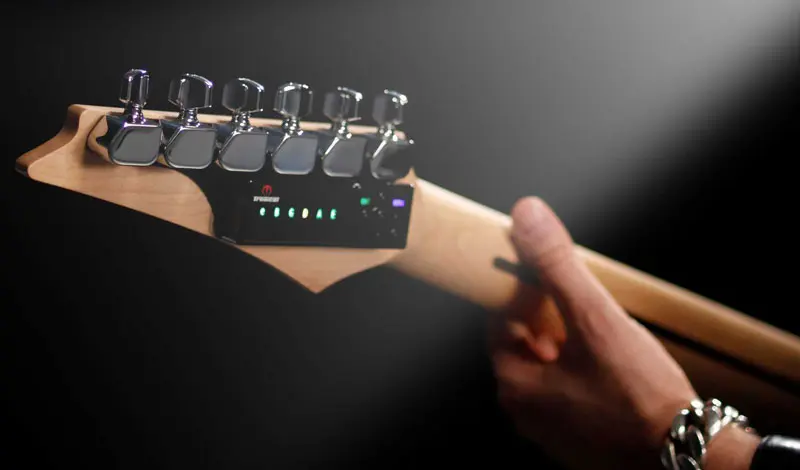
Fully automatic tuners represent the pinnacle of tuning technology. One such option is the **TronicalTune**, which can tune the guitar automatically at the touch of a button, allowing musicians to focus on their performance instead of the mechanics of tuning.
**Pros:**
– Fully automated tuning
– Adaptable to various tunings
– Quick and precise
**Cons:**
– May require installation
– Higher initial investment
### Real-World Examples of Tuning Needs
To illustrate the importance of reliable guitar tuning, let’s look at two real-world scenarios.
#### Example 1: The Live Performance
Imagine a local band preparing for a big gig. The lead guitarist, excited to showcase their new song, assumes their guitar is in tune. However, as they begin to play, the audience can immediately tell something is off. The band’s energy gets drained as they struggle through a few awkward measures. After a quick tune-up using a clip-on tuner, they regain their confidence, but the moment of uncertainty lingers in everyone’s minds.
This scenario demonstrates how crucial it is for musicians to be diligent about tuning before performing. A reliable tuner ensures that musicians can present their best selves, helping them deliver a memorable experience to their audience.
#### Example 2: The Home Studio
Now picture a guitarist working from home on a new album. They meticulously layer tracks, adjusting melodies and harmonies as they go. Suddenly, they realize that the guitar sounds flat. A quick check with a pedal tuner reveals significant tuning discrepancies. This realization means that hours of recording may need to be redone, as even the slightest variations can cause dissonance in a studio mix.
A reliable guitar tuner in this scenario provides peace of mind and a chance for creativity to flow without disruption. It allows musicians to focus on artistry instead of technical issues.
### Tuning Techniques Every Musician Should Know
While a good guitar tuner can be a musician’s best friend, understanding and mastering basic tuning techniques can deepen your relationship with your instrument. Here are a few techniques that every guitarist should employ:
#### Standard Tuning
The most common tuning for a six-string guitar is E-A-D-G-B-e (from the lowest string to the highest). Knowing how to quickly tune your guitar to this standard is essential and should be second nature.
#### Harmonic Tuning
Using natural harmonics can help you tune your guitar by ear. By playing the 5th fret harmonic of the low E string and matching it with the 7th fret harmonic of the A string, you can achieve perfect tuning.
#### Relative Tuning
If you don’t have access to a tuner, you can still partially tune your guitar using relative tuning. Once your low E is in tune, you can use it as a reference point to match the other strings.
#### Use of Digital Tuners
Using digital tuners, like the TronicalTune, can help you perfect your tuning throughout your practice sessions. It allows you to explore different tunings effortlessly, making it easier to switch styles and create new sounds.
### Conclusion
A reliable guitar tuner is not just a luxury; it’s an essential tool for every musician. Whether you go for a simple clip-on, a professional pedal, or a fully automatic solution like the TronicalTune, the importance of tuning your guitar accurately resonates through every note you play.
As you delve deeper into your musical journey, remember that tuning is a fundamental practice that enhances not just your sound, but also your overall experience as a musician. Embrace the tools available to you and ensure that your instrument is always ready to deliver maximum sonic potential.
In the world of music, where everything hinges on precision and harmony, there’s no room for the inconvenience of an out-of-tune guitar. So keep your tuners close and let the music flow!
For a real-world fix: TronicalTune system.
For a real-world fix: TronicalTune product details.