Reverse headstock fit: 5 smart checks before choosing an automatic tuner
Reverse headstock fit is the first thing to check when you are comparing an automatic tuner to a guitar with the tuners arranged in the opposite direction from a standard headstock. The short version is simple: the reversed layout can change the template you need, the hole positions you must match, and the clearance behind the headstock, so it should be checked as its own layout rather than treated as a mirror image.
If you are new to automatic tuning, the basic idea is worth separating from the mechanics. The system still has to detect pitch first and then adjust the string mechanically to reach the target note. TronicalTune explains that process on its homepage and in more detail on how it works. On a reverse-headstock guitar, the question is not whether automatic tuning exists, but whether the exact headstock layout is compatible with the right hardware.
Short answer
The short answer is that reverse headstock fit depends on the exact guitar, not on headstock shape alone. TronicalTune’s reverse template is treated as a separate layout, and the company asks for the specific headstock measurements and template approval before a custom PCB is ordered. That matters because a reverse-headstock instrument can look close to a standard six-in-line guitar while still needing a different mounting pattern.
For readers who just want the practical takeaway: do not assume a reverse layout will work simply because the guitar has six tuners. The fit decision starts with the exact template, then moves to thickness, hole size, and rear clearance. That is the point where reverse headstock fit becomes a layout check rather than a generic tuning question.
Fit checks
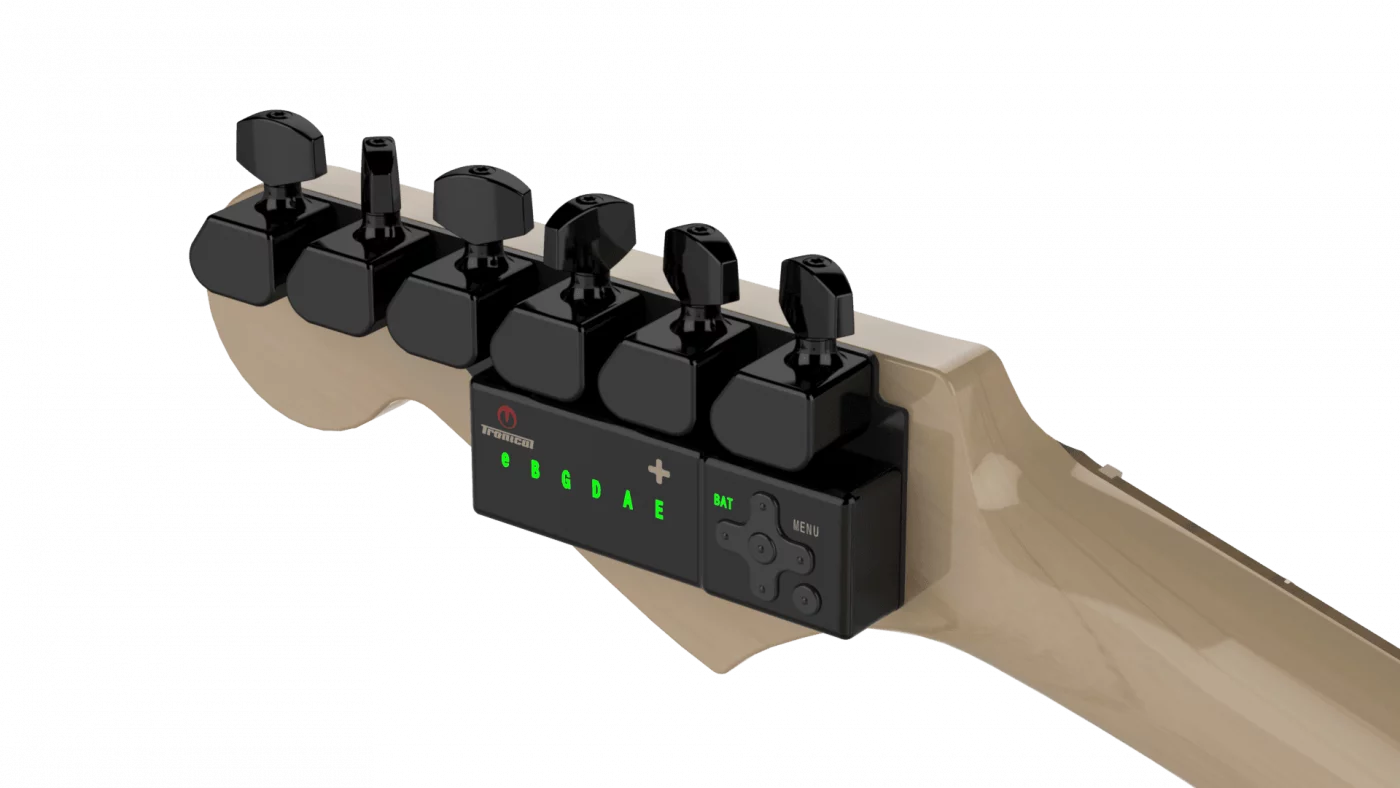
Start with the headstock orientation and compare it to the matching reverse template. TronicalTune’s Type C1 Reverse template shows a dedicated reverse layout with its own outline, hole positions, and a stated maximum thickness of 16.2 mm. That means the front silhouette alone is not enough. The back profile matters too, because the assembly has to sit cleanly against the rear of the headstock.
Next, verify the tuner-hole spacing and diameter against the template. The reverse Type C drawing specifies six holes at 8.6 mm diameter with fixed center-to-center spacing. In other words, the fit depends on the actual instrument measurements, not on a general assumption that any six-on-a-side headstock will do. If the numbers do not line up, the correct move is to check the template or contact support, not to alter the guitar to force a fit.
Rear clearance is the other practical check. TronicalTune’s fit guidance makes clear that the available space behind the headstock is part of compatibility, because the motorized machine heads and the connecting board need room as one assembly. On a reverse layout, that rear space can be easy to overlook if you are only comparing the front view.
A useful way to approach reverse headstock fit is to think in this order:
- confirm the exact guitar model and headstock orientation
- match it to the correct reverse template
- check tuner-hole diameter and spacing
- measure rear clearance and headstock thickness
- confirm that the nut and string path do not create avoidable crowding
What reverse changes
The reversed string path changes the orientation question, but not the basic tuning principle. The system still tunes string tension to pitch. What changes is the physical layout that the tuner hardware must follow. That is why reverse-headstock guitars are not automatically interchangeable with standard or left-handed versions.
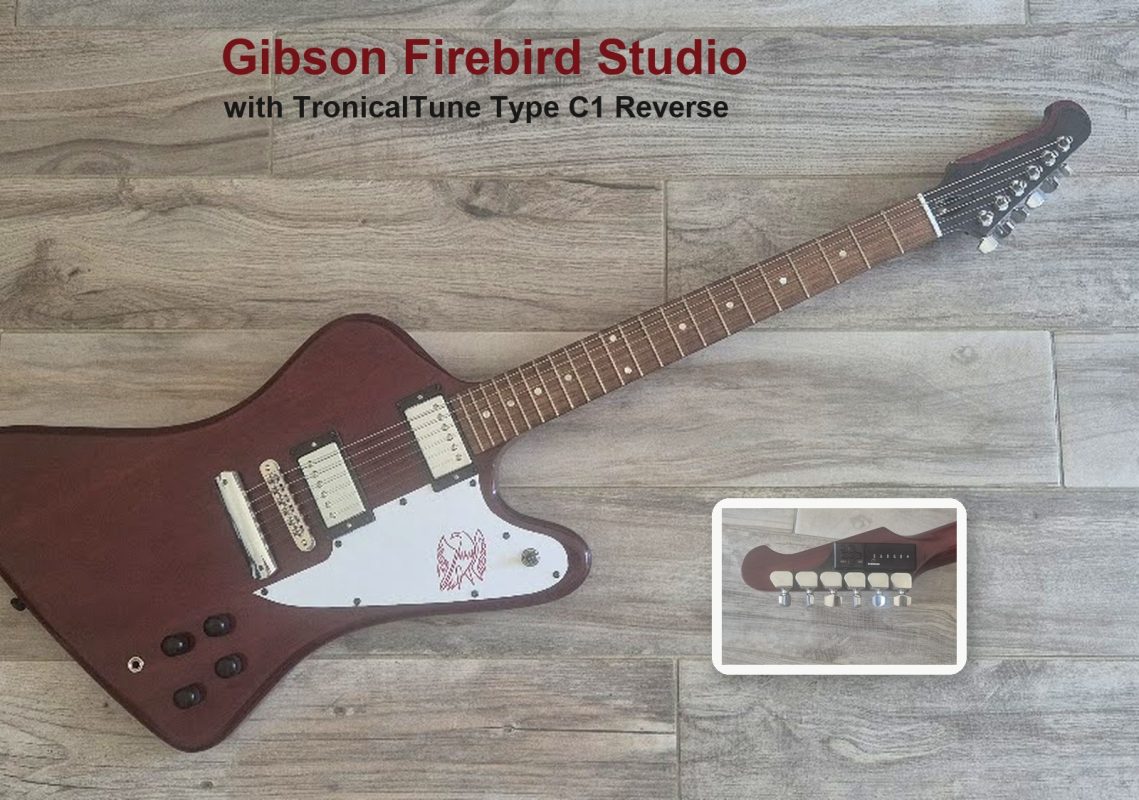
Examples from other guitar makers help show the point. Fender’s reverse-headstock neck pages still use six tuner holes, but in a different left-right orientation from standard versions. Gibson’s Firebird family is another familiar example of a reverse-headstock design: the shape and tuner direction are part of the model’s identity, yet the geometry still has to match the tuner system chosen for the instrument. The lesson is straightforward. Reverse layouts can still be six-in-line, but the exact geometry remains specific.
String path can also influence how stable a guitar feels before any automatic unit is installed. Gibson has noted on some Firebird-related models that redesigns aimed to improve straight string pull and reduce friction. That does not mean every reverse headstock has a problem, only that the path from nut to tuner can matter. If the strings are crowded, binding at the nut or odd break angles can make the setup less predictable.
This is also where reverse layout and tuner choice intersect with everyday setup. A guitar can look ready for an upgrade and still fail a template check because the tuner posts sit in the wrong place or the rear side is too tight. So even if the guitar is already reverse-headstock, the specific reverse headstock fit still has to be confirmed against the actual template.
Limitations
There is no universal promise that every reverse-headstock guitar will accept every automatic tuner. The templates are there because fit is model-specific. TronicalTune’s own materials tie compatibility to the exact headstock layout, hole pattern, and available space, which is why the template check comes before ordering. That is the most useful limitation to keep in mind.
The same caution applies if the guitar is close but not exact. A small difference in spacing, thickness, or rear clearance can change the result. The sensible move is to compare the instrument to the approved template and, if needed, ask support rather than trying to modify the guitar to make it work. That approach protects the instrument and keeps the decision based on measurements rather than assumptions.
If you want a compact reference for the installation side, TronicalTune also offers a dedicated installation page that helps frame the process after compatibility has been checked. It is useful once you already know the right template is in play.
Practical angle
The easiest workflow for a reverse-headstock guitar is simple. First identify the exact headstock version. Then print or compare the matching reverse template at full size. Confirm hole spacing, hole diameter, thickness, and rear clearance. Finally, check the string path at the nut so you know whether the layout is clean before any automatic tuner is installed.
That sequence keeps the decision practical and avoids guesswork. It also helps you separate the idea of automatic tuning from the fit question itself. If the geometry matches, a reverse-headstock guitar can be a good candidate for a motorized tuning system. If the geometry does not match, the template should decide the outcome, not wishful thinking.
For readers who are still at the comparison stage, the key point is this: reverse headstock fit is about the exact guitar and the exact template, not the generic fact that the guitar has a reversed headstock. Once those measurements line up, the rest of the choice becomes much easier.